Home > Plants > Kiwi plant self fertile Kiwi plant self fertile / Actinidia chinensis |
Product[s]
Which package wish you order this product ?
|
Ref
|
Description
|
€ Inc Tax
|
Buy
|
Availability
|
|
2357N
|
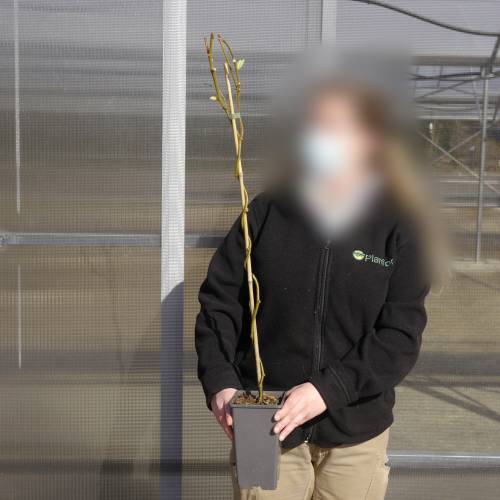
Kiwi (Actinidia chinensis) 'Solissimo® Renact' - Self fertile
Large and succulent Fruits (60 à 70 g).
Plant grown in 3 liters pot - Height of plant: 70/90 cm (28/36").
|
19.95
|

|
Available
|
|
2357J
|
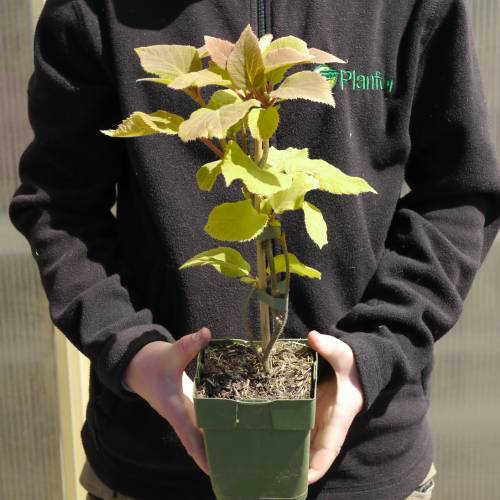
Kiwi (Actinidia chinensis) 'Solo' - Self fertile
Young plug plant - Height of plant: 15/20 cm (6/8").
|
5.95
|

|
Available
|
|
2357K
|
Kiwi (Actinidia chinensis) 'Jenny' - Self fertile
Young plug plant - Height of plant: 10/15 cm. (4/6").
|
5.95
|

|
Available
|
|
2357L
|
Kiwi (Actinidia chinensis) 'Jenny' - Self fertile
Young plug plant - Height of plant: 10/15 cm. (4/6").
Unit price available starting from 10 units purchased.
|
4.50
|

|
Available
|
|
2357M
|
Kiwi (Actinidia chinensis) 'Solo' - Self fertile
Young plug plant - Height of plant: 15/20 cm (6/8").
Unit price available starting from 10 units purchased.
|
4.50
|

|
Available
|
|
2357A
|
FERTILISER – Fertiliser tablet to place at the bottom of the hole before planting. Slow release over 7 to 8 months. Only 1 tablet in each hole.
|
0.40
|

|
Available
|
Specification sheet
Hardy kiwi, Self Fertile Kiwi -
Actinidia chinensis (latin)
Geographical origin: China.
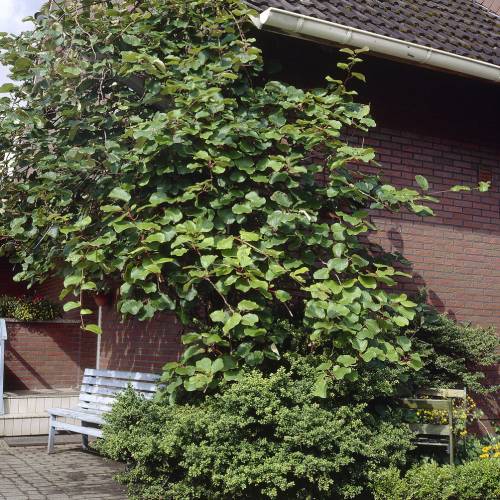
Adult dimensions: Height up to 6m (19.7'), width up to 3m (9.8').
Foliage: Deciduous.
Type of soil: Light, rich in humus. Dislikes lime.
Hardiness: Hardy to -12°C.
Site: Mid-shade to full sun.
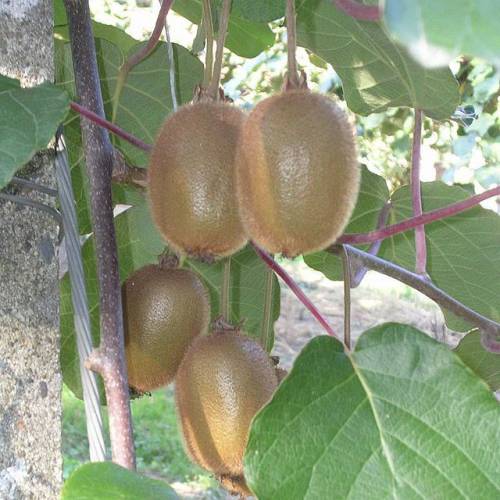
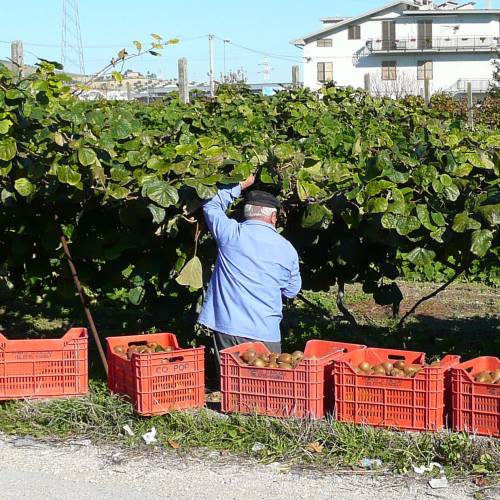
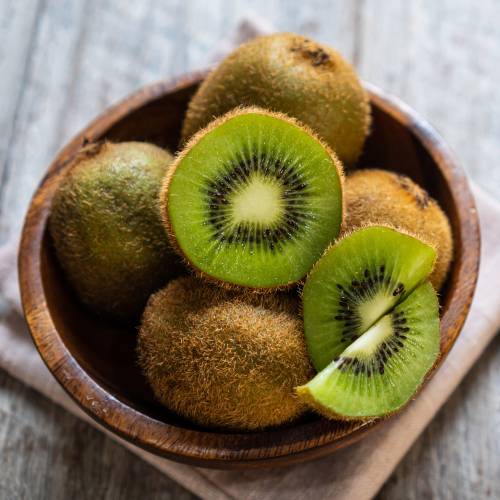
Characteristics and uses: The varieties ‘Jenny’ and 'Solo' are self-fertilising, meaning that it is not necessary to plant male and females in order to obtain fruits. The creamy white flowers in June and July leave in their place edible fruits called kiwis in the autumn. The fruits of these varieties are small and sweet.
The kiwi is a vigorous creeper which can be used in the garden to great benefit because it doesn’t cling to the surface. A sufficiently strong structure should be used to support new shoots and fruits.
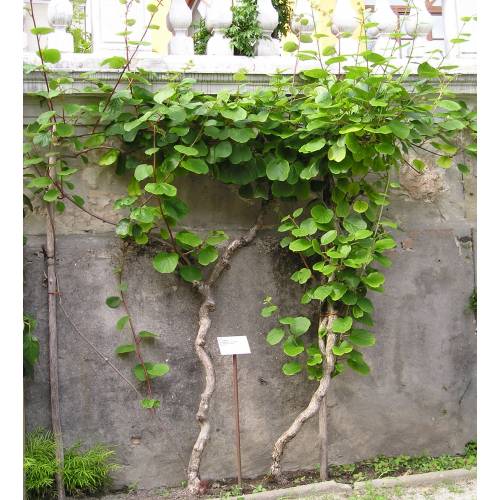
In order to protect from cold winds, this plant can be trained as an espalier against a south-facing wall. Pruning should be done in winter up to February/March and similarly to a vine, that is to say two or three eyes above the last fruit.
List of trees and shrubs with edible fruits:
Black Chokeberry 'Viking' (Aronia melanocarpa 'Viking'), slightly acidic berries, purple black used in jam-making
Blueberry Bush 'Jersey' (Vaccinium corymbosum 'Jersey'), slightly acidic fruits, from August
Common Hazel (Corylus avellana), nuts from September
Common Walnut (Juglans regia), nuts from end of October, delicious in salads
Pineapple Guava (Feijoa sellowiana), fruits rich in vitamin C and pineapple taste, only grows in warm climate areas
Raspberry 'Fall Gold' (Rubus idaeus 'Fall Gold'), soft fruits, fragrant, orangey yellow, double cropping and self-fertile variety
Raspberry 'Heritage' (Rubus idaeus 'Heritage'), soft and fragrant fruits, double cropping and self - fertile variety
Red Chokeberry 'Brilliant' (Aronia arbutifolia 'Brilliant'), bright red fruits from the Autumn
Strawberry Tree (Arbutus unedo), hardy to -12°C, its fruits look like a strawberry
Sea Buckthorn (Hippophae rhamnoides), extremely decorative fruits, rich in vitamin C
Sweet Chestnut (Castanea sativa), edible fruits when grilled
White Mulberry (Morus alba), pinkish white fruits, sweet
Edible Hedge 'Ophélie', provides edible red fruits throughout the summer
See the catalogue of tree and shrubs with edible fruits
|
Consumer reviews >> Write your own review
|